Friday, September 30, 2011

Zea Mays

Zea Mays. It’s such a beautiful name. It comforts me that the Latin name sounds a little bit like the Italian word for Auntie – Zia. It’s the backbone of industrial agriculture in this country. It’s also one of the true joys of summer for me. Corn.

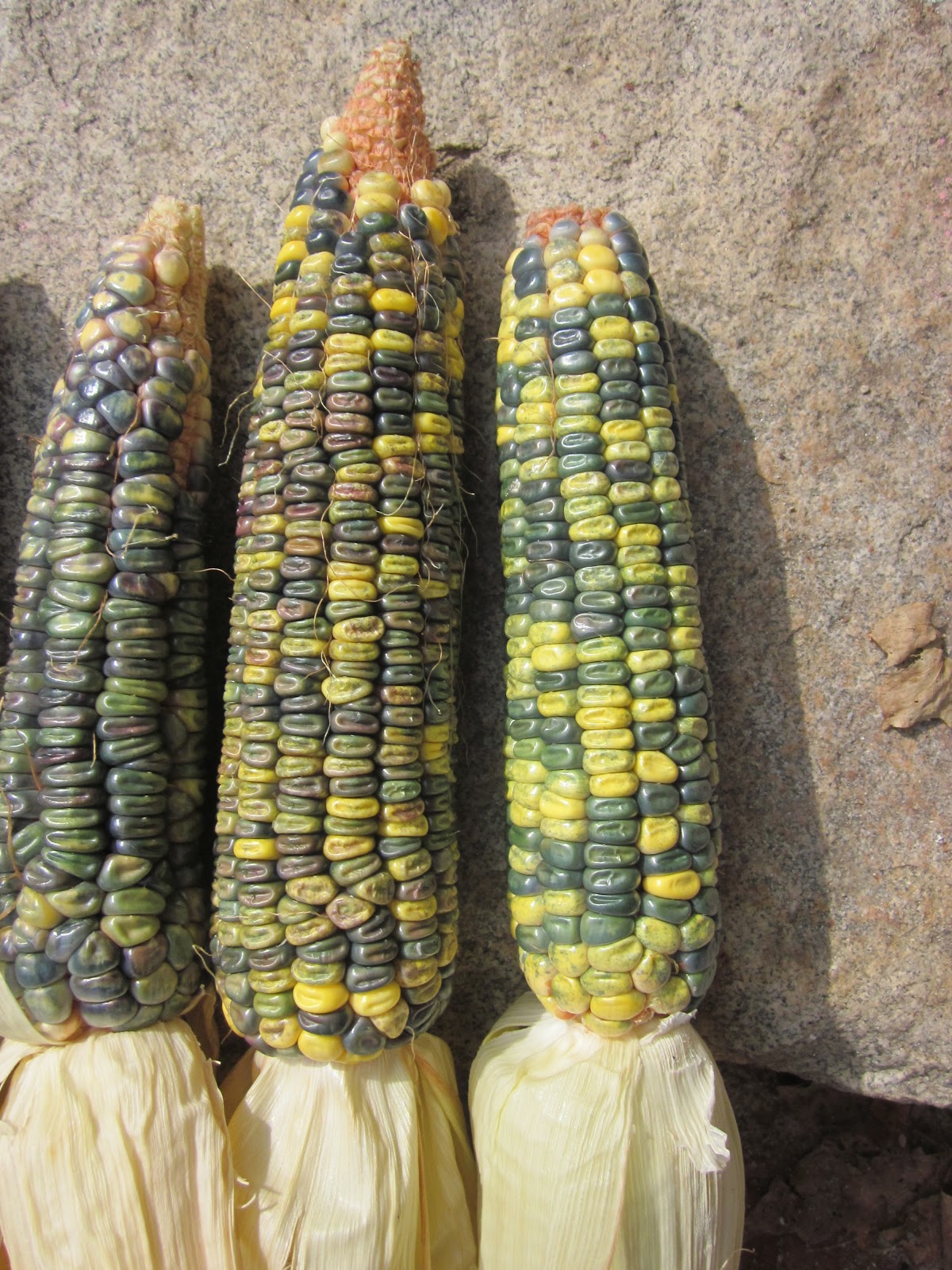
The variety we grew this year is a Oaxacan green dent - far from an industrial agriculture breed. In fact, there will be little capital gain from this crop... We purchased the seeds from Seed Savers, a fantastic non-profit devoted to saving heirloom seed stock and connecting people who are passionate about preserving our shared plant heritage. The Corn grew to thirteen feet + in 2 months. One of my favorite things to do this past August was to sit amongst the plants on a windy day and listen to the rustle of the leaves.

One of the best parts of harvesting the corn was to shuck it. Each ear revealed dazzling colors of jewel-like quality. Perhaps that sounds cliché, but I had never expected the wide spectrum of iridescent green, purple and blue with yellows and golds occasionally mixed in. Our aspiration is to dry the corn and mill it into flour for use in making tortillas, tamales or corn bread. It’s a lot of labor to do so, and I am grateful for the option to have this project be a project and not survival. That said, I truly enjoy the process of learning about how to grow plants and then how to prepare them in traditional ways. I believe it helps to connect me to my forebears, and to the community of people like me who care deeply about the quality and the stories of food. That time to process and make special foods is precious and rare for me these days. But when I can get it, I always feel refreshed. 

The following photos are from the Harvest this year....


Friday, September 23, 2011

Equinox


Today is the equinox. Well, to split hairs, it happened already at 5:05 am. According to one op-ed I read, the equinox produces a reduction in the Earth’s magnetic field, “allowing easier access to other dimensions, making this a propitious moment to be in a power spot.”  I believe it.

Light falls differently, somehow, more intense than in summer, but more fleeting. The exuberance of the summer vegetables fades, as the last tomatoes cling to droopy vines. Basil, always a rich emerald green, begins to sport brown spots on its leaves. There is a sensation of the land letting go, and the systems of life preparing for dormancy that winter brings.

As ever, there are the stars that herald the arrival of this time, Asters. For some reason, there seem to be more varieties of aster this year than I have noticed in previous years. Purple, light blue, white. Shots of joy and delight. Thinking about the reduction in the earth’s magnetic field, when I see those asters everywhere it’s easy for me to imagine that they are poetic reminders of the sanctity of this time, where we all begin to slow down, gather what is important, celebrate the bounty of summer and prepare for the coming winter, somewhat like the bee in the bottom photo is doing.


Wednesday, September 21, 2011

Cupola

Last Friday, after a trip from an Indiana Dairy farm, a stint in Turner's Falls being restored, and a test run through hurricane Irene to see if the new paint would run, the barn cupola was put up. Testimony to how right it looks is that few if any neighbors noticed that it is new.... a feat for a 10+ feet high metal object with a big red ox on top of it. 

Since getting here, we've been restoring this old farm's landscape to honor the history of this place, the sublime beauty of the surroundings and to contribute our share to the spaces here as a reflection of who we are. Getting the cupola up with the ox is fitting for this time. It represents a beautiful end to the great amount of work to stabilize the barn's foundations, to shore up its walls, to add windows and to get the barn cleaned to a state that befits it's elegance as a structure, and it's status as a living memory of the people and animals that passed through it's doors. In this barn, the last in many generations of farmers of this land died doing what he loved. If all of us could be so blessed to go doing what we love.

I think alot about the power of history, memory and place and how they all intersect. Living in New England, it's part of the deal, though I guess that anywhere it's part of the deal. Looking up at that ox, an animal in the Chinese zodiac that represents steadiness, reliability and determination, I am reminded of the commitment I feel to honor the gift I receive which is to wake up and do the work I do and love. 

Thanks to everyone who contributed to the projects on the barn over these years.....


before

weathervane

Bryan


Mitch


Thursday, September 15, 2011

Bridge


Be like water the Tao advises. I remember that advice because it blew my mind when I first read it in high school. With all the talk of molding young men and sculpting minds that was the pedagogy of my school, and having been the object of said molding and sculpting, I experienced a deep relief to know that I could be like water;

"Water never resists, Water accepts all. You don't have to compete."

Funny, this advice came in handy while building a bridge the other day. In the plan, the bridge was beautiful, elegant, harmonious and balanced. In the field, it was not going to work because a hard gravel base 3 feet below the surface of the water with giant stone interspersed through out the soil made it nearly impossible to get the proposed configuration. The spontaneous evolution of the bridge reduced the impact to the wetland by only sinking two posts instead of four in the wettest area, and created a strong connection to the rest of the landscape design features through the granite cribbing used for steps. By letting the genius of the moment work with the combined experience I shared with Bryan, the carpentry sage, the bridge functions on a physical level to go from point A to B without getting wet, and on the metaphorical level as well. Be like water, and you don’t have to get wet at least some of the time. 


Wednesday, August 24, 2011

Late Summer Poems


Summer's waning. Cool nights. The light is intense, but lower. On the terraces, the play of plant edges with steel and rock begins to become satisfying. The garden develops its own rhythms. Spaces evolve. Sure, there's the design and the vision to establish those spaces at the outset, but the processes happening now are poems and verses that happen of their own accord and I just happen to encounter them while moving through the landscape. There's a Utah Phillips song I think about where he talks about a man who does not write poems - he finds them. That's an inspiring meditation...


Wednesday, August 3, 2011

Microclimate and Ecology

Understanding the nuance of existing microclimate is part of the assessment I truly enjoy. It's here that components of landform, canopy, soils, winds and sun, buildings, and roads among others come together. In my understanding, microclimate best represents existing conditions of what some might call urban ecology - where human actions and "natural phenomena" are put together as opposed to the traditional - natural and man made categories. I'd argue that ecology always did include people everywhere, not just in urban areas. As a species, we've had a tremendous effect on the planet, and to separate humans from the rest of the species and systems on the earth creates problematic dissonance. I have experimented with my graphic representation of microclimate shown in varying intensities of yellow below, combining it with human use, and overall physical landform. For a first go round I think it's compelling. 

I've included some other diagrams below to illustrate current conditions onsite at the center's core.


Thursday, July 28, 2011

Farm museum

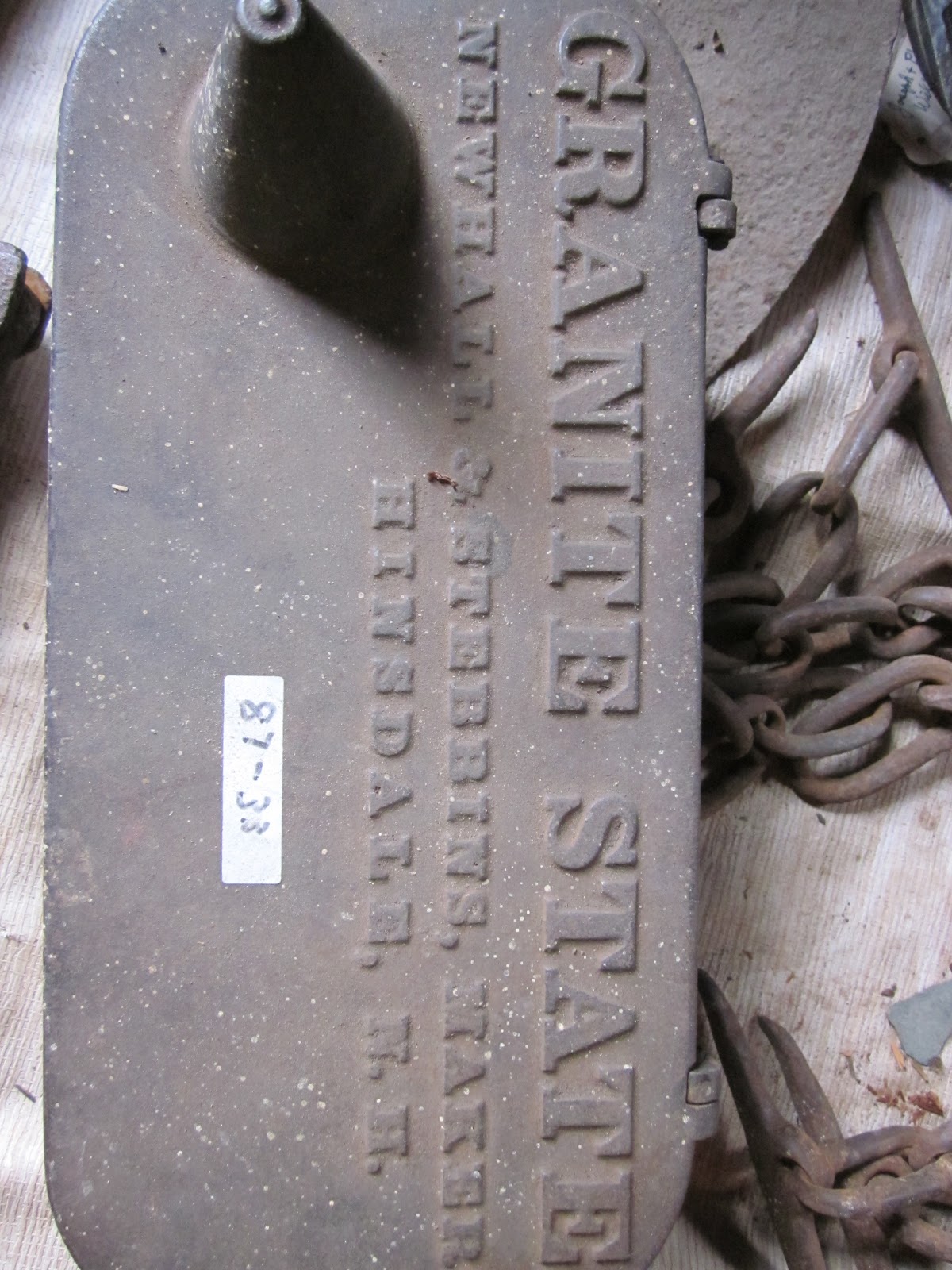
A few weeks ago I went to the farm museum in Williamsburg, MA to see the town's collection of implements especially from the dairies in the area. With so many of the local dairies closing, several gone in Cummington!, and our food systems becoming more and more consolidated and industrialized, I was somewhat saddened to see the glass bottles, milkers and engines relegated to curiosities. There is a beauty to the utility of these objects  with their clean lines, economy of materials and branding. How many logos and packaging materials today inspire you? Walking around that collection, I was struck with the whimsy of the packaging and details that adorned these objects that were used everyday as critical components of survival for the people using them. The details lavished on the carts and lathes speak to the pride and art that went into the creation of these objects, and the gratitude for time and energy saved by using them. From my days working for a Folk Art Dealer, and at the Freer and Sackler museums of Art, I grew to love and admire the power of everyday objects. There's magic in touching or looking at objects that have been used repeatedly in both spiritual and secular ritual. I truly enjoyed seeing the magic that was part of the farms in this town. 

The following are a selection of my favorite logos and lettering from the museum....