Thursday, June 14, 2012

Walking


Walking. Ambling. Strolling. Sauntering. Moseying. Loping. Those are among the more appealing ways to walk for me. I was a critic the other day at the Conway School’s final presentations. All of the presentations had something to do with “circulation or walkability.” In design school, walkability was a hallmark of a “sustainable” city or development. What is walking anyway these days? All of us walk. Some with ear buds, some while texting, some while eating, some arm and arm. What about surfaces? There are cobblestones, bricks, planks, rubberized tracks, those freaky moving sidewalk things at airports, I am not sure that the overarching concept of walkability takes these into account though. Perhaps planners, designers and policy makers are to the point where they think that any walking would be success – getting people out of their cars, away from the computer (yes, I realize the irony of my writing and posting this on the computer….) and into the world. 

I love walking. Some of my favorite books are about walking, The Songlines by Bruce Chatwin and Wanderlust by Rebecca Solnit give beautiful histories and descriptions of walking and how people have moved across this earth. Keeping those examples in mind along with the power and immediacy of direct experience, I have been experimenting with path making here since we arrived 5 years ago. The following are some of my path attempts…..

“Man's real home is not a house, but the Road, and life itself is a journey to be walked on foot.”
― Bruce Chatwin, What Am I Doing Here?  


Monday, June 4, 2012

Herb Weekend

There's something powerful to me about these herb weekends. Perhaps it's that nearly every time I go on one of these weekends, and I am immersed in the systems of the human body and how plants can help to stimulate the efficiency and heal those systems, I understand more profoundly about the relationship people have with plants and landscape. Intuitively, it's a no brainer for me - because I am a plant nerd. My children are named for trees. But, to have some quantifiable proof of the healing powers of plants from sources like Roger Ulrich at Texas A& M, Sloan Kettring's index of herbal plants, and the anecdotal evidence from our instructors through their years as clinicians, strengthens my case for integrating medicinal plants into the landscape for aesthetics and for personal/ecological restoration....One of the things that stands out to me from this weekend, is not anything that anyone said, but the beauty of the plants that were growing on the farm. The forms of these plants are beautiful. Spending time looking at each one, and making connections to how they are used, and how I have used them made the experience of seeing them incredibly meaningful to me. In these times where so little is within our "control" and when so much is fast paced, slowing down to get to know plants on the levels of healing, beauty and ecological context feels almost decadent to me. But that's the power of taking that time. Taking time - instead of letting someone else take it for you - is a process that once begun re-establishes your connections to your self, to your family and to your world. That's healing.

clary sage
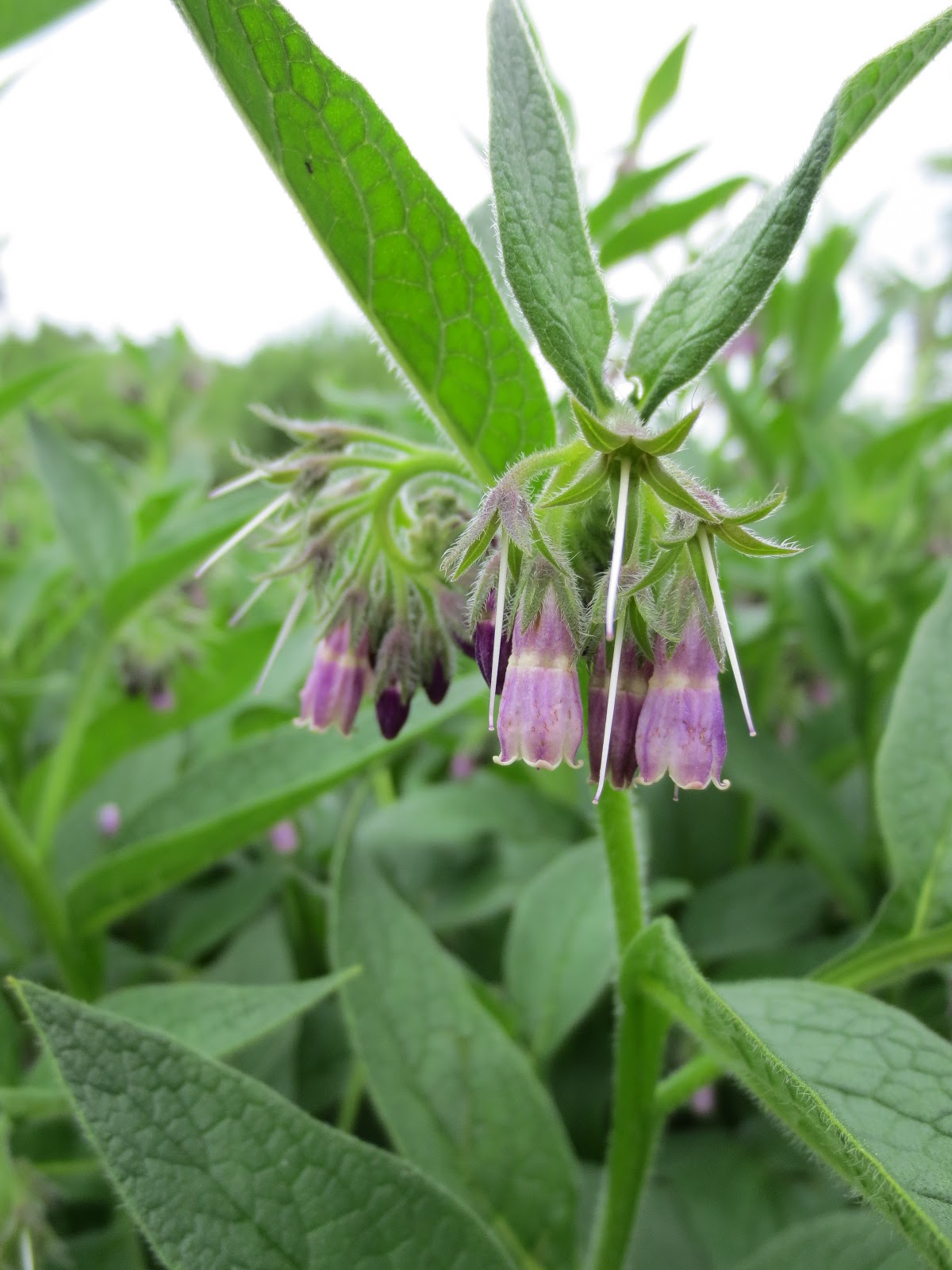
comfrey
elderflower
blue flag iris
angelica
wild yam
arnica

Thursday, May 31, 2012

Mock Up

Georgia O'Keefe said once that she wanted real things - Music that makes holes in the skies. I love that statement. Indeed, it is part of my fabric and who I am. After those holes are made and the music flows the models and drawings evolve. It's the joy and the challenge of art - to manifest the eternal using the mundane ( Mundane here means what's physical, not that materials are mundane....).  I have put in a fair amount of work for the installation that Dan Snow and I are doing in Oregon, but up to now, it's all been on screen or on the drawing board. This is to be living sculpture that people will live with, generate their own relationships with. I wanted to see what it would be like to live with a very, very modest analog for my own experience.

With the help of some talented and patient men from Hilltown Tree and Garden, I maneuvered a large river cobble onto some granite cribbing. Plants from Prairie Moon nursery came the next day, and I was able to approximate the feel of what the final installation might be like.

I have always loved this particular river cobble. I had never ever seen any thing like it before, such a deep red with the ochrey marbling. It had sat half buried for the longest time, and I now had the ultimate spot for it. It proved easier to move than I imagined, and getting it onto the cribbing was straight forward as well. At first, it looked out of place there, but as I began to visually digest it, the piece really excited me. There's a tension to the way the roundness of the cobble is perched on the straight edges of the granite - as if it may be a frozen moment. It's also beautiful because you're able to discern the total shape of the cobble, where before it was not legible. The color contrast is striking as well, and when the plants grow in, the soft greens of the vegetation will add another dimension and softness to the piece.

I am looking forward to living with the piece overtime and seeing how my relationship evolves with it, and how closely it approximates the installation in Oregon.


Tuesday, May 22, 2012

Design fieldtrip

A few weeks ago, a good friend was passing through Boston, and I drove the 2 hours to see him. It was great catching up with said companiero over dim sum, but the best was ambling through the somewhat new Greenway together. Growing up I can remember the adventure of crossing under the Central Artery going to and fro from the North End, praying that the funky, stanky water dripping from above would not get on my red nylon Nikes, and that the freakishly large rats would not wrestle the cannoli from my hands. Thankfully, those anxieties were rarely realized. 

What is in place there now is a feat. Navigation of the permitting process alone is heroic and there are spaces that are truly memorable and evocative of place amongst the highrises of downtown - which make them all the more special. Standouts for me include the plantings in several areas - layers of native vegetation, but things not so common in the "palette" of landscape plant vernacular. I loved seeing Bugbanes, Tupelos and Virginia Sweet Spire interspersed with the more ubiquitous Inkberry and Arrowwood Viburnum.  The boldest move that I saw, but that sadly missed the mark was a passage filled with Dawn Redwoods - (Metasequoia glyptostroboides...one of my favorite Latin names...) and wild ginger and even some trout lily. All these plants were in poor shape and it raised a question for both my friend and I about the role of landscape dynamics - and how as designers working on contract or spec, in a fluid medium like plants, one can plan(t) for change. This entry is too small to explore this in any great detail but it's a great question and one that can prove confounding. Where there are specific criteria for buildings, roads and sewage systems, for a changing landscape and ecosystem dynamics there's more mutability ( yes there are criteria for landscape and ecological systems - but work with me for the sake of argument). For me, the controlled chaos within a garden or a landscape makes them alluring to me. I can attempt to maintain form, and some rhythm, but beyond that, I like to see what happens...Design for change is the idea, so that over time, as the landscape grows, you grow and evolve with it. That section of struggling woodland plants had no business in the baking sun where it was sited. Using an adaptive management strategy, those plants could have been cycled in when it was appropriate after some canopy had developed and some soils had been built over time - but I loose myself in design speak. 

It's beautiful. It's an improvement and what a gift to the Downtown. Bravo. 


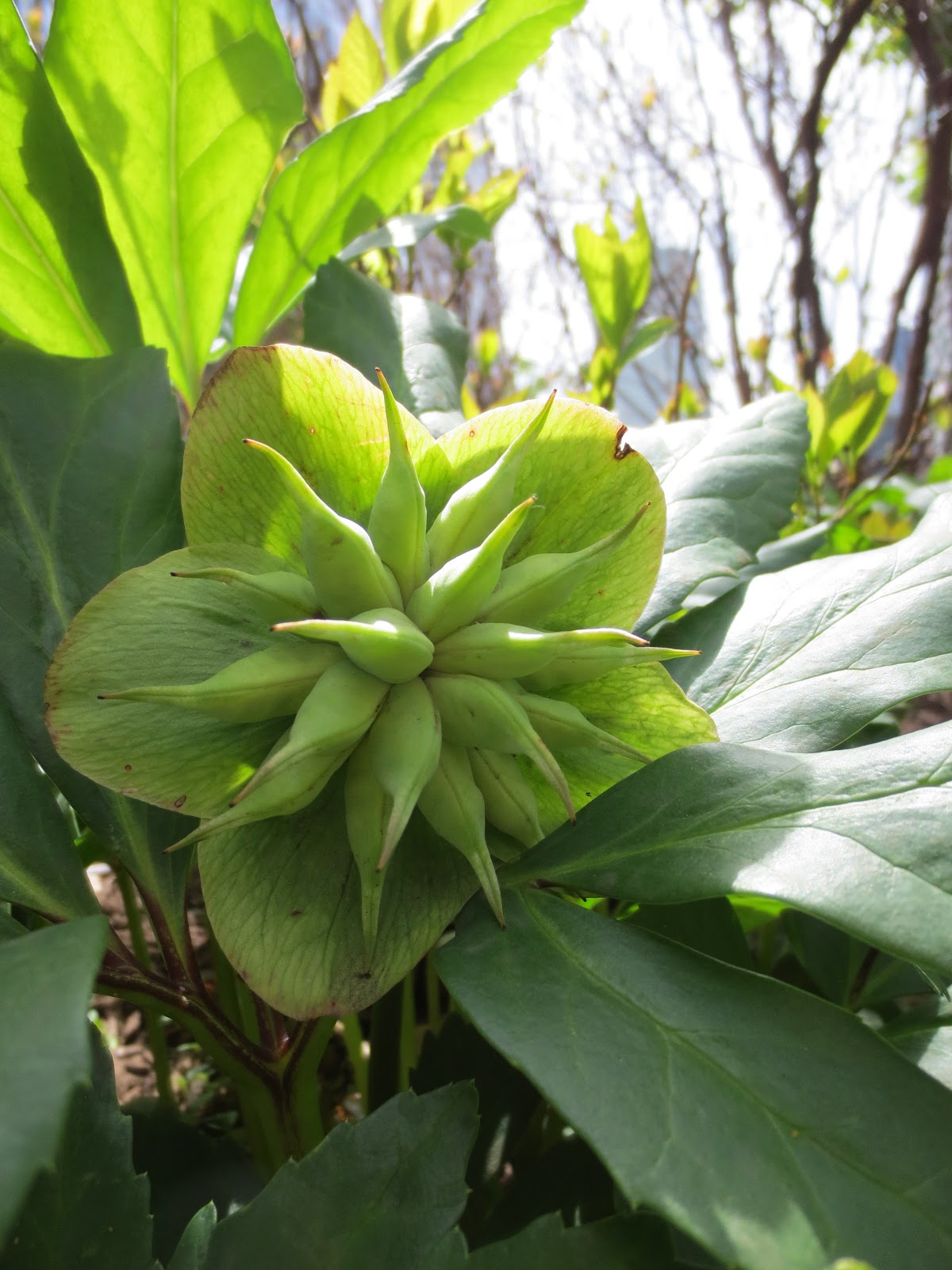
hellobore in seed


stomwater basin


Tuesday, May 8, 2012

Spring salad

I am working on becoming a community herbalist. Ostensibly, that means that I can diagnose and treat people for baseline physical maladies - colds, coughs, respiratory and digestion challenges. My primary motivation for taking the course is to learn more in depth about the particular healing properties of each herb - what it treats, its growth pattern and which tradition it falls into - Ayurveda, Traditional Chinese Medicine (TCM), Western and Native American - foremost amongst all others. With that understanding, I can integrate those plants into landscapes that could help support people who have compromised health systems. I am doing that here at home and have designed for that with the community at Black Oaks.  An unexpected benefit has been learning an overview of the human health systems, their function and how much overlap there is between the micro-ecosystems within each person and the larger ecosystems around us in the world. Nested Ecologies - my underlying passion! 

The system we learned recently was the digestion system and ways to detoxify....It's that time of the year - when fresh greens - asparagus, nettles, lambs quarters and dandelions are appearing. All of these are great liver tonics, and help to produce bile to fire up the digestive process and clean and restore the body. Co-evolution at work....After one intensive session - all of us went out and harvested a "wild salad" to supplement our base of conventional lettuce, spinach and tatsoi greens. It's important to remember that the wild greens are best taken in smaller amounts because of their powerful digestive stimulant properties - I know this through my own experience. That said in moderation, there is something primally satisfying about foraging for food - especially something that has not been grown by you or anyone else. How many things do you consume everyday are truly "wild?" Eating wild is one way to truly ingest and digest the landscape around you - a practice that may bring (with moderation) a new perspective on what grows around you and what role the land plays in your life and the lives of your family and community. This time, one of my greatest revelations is how delicious trout lily leaves are. I never would have thought to eat them, but they are spicy like watercress, slimy like purslane and crunchy - besides the flavor - the mottled greens of the leaves are a delight....

I've also included a dressing recipe for making the greens more attractive to eat......thanks to my peers in the class...

Makes 3 Cups
2 Bunches cilantro/parsley
1/2 Cup Olive Oil
3 tsp Miso (white)
5 tsp Honey
6 TBLS Apple Cider Vinegar
2 Cloves Garlic
Pepper & Salt to taste
Zest of 2 lemons
6-7 TBLS Lemon Juice
1 "Bunch" assorted Spring Weeds - Chickweed, raw nettles, garlic greens, dandelion greens, dandelion flowers, catnip and chocolate mint
1 tsp Spirulina (optional)
 
fixins

dandelions

trout lily

burdock root


Wednesday, April 25, 2012

Trillium

Just over the hill, between the stream and embankment wall - I knew I'd find a trillium. I had a single purpose and focus. But sitting there, pencil in hand, my ears filled with the stream's voice. My eyes were seduced by joyous layering of textures and colors. My skin was warmed by the sun. The supple down of the unfurling red maple leaves tickled my ear every time the wind blew. Peripheral vision flooded in. It's spring now.

marsh marigold
Trillium
Indian Hellebore
Serviceberry

Thursday, April 5, 2012

James Hampton

Visionary Art. 
It's a funny term. It's far nicer than the french term for it - Art Brut. My heart holds a special place for Visionary Art  - because I grew up going to antiques auctions, where paint decorated furniture, weathervanes, and all manner of folk art were on view to look at and examine during the previews. Into my twenties, I grew to love the quirky, the funky, and the carnivalesque creations of artists like Wolfi, and Simon Rodia ( who created Watts Towers). I still love how soulful, expansive, and honest the work is. Nearly every visionary artist to me has a shamanic quality to their work, with the range and depth of the mythos that inspires their outflow. It's refreshing and at times startling to see that degree of raw connection to something that eludes or defies shared language. One artist I've been thinking about alot these days is James Hampton and his work - The Throne of the Third Heaven of the Nations' Millennium General Assembly.  There's a great back story here on the Colonial Williamsburg website: 


I got to spend a fair amount of time with the installation when I was interning at the American Museum of Art. No matter where I was that day while there, I always managed to be drawn to it. The pieces are beautiful, of humble materials but so imbued with meaning and intention that they hum with energy. Being there is quite an experience, and if you have the chance to go there I'd recommend it. Plus there's a great Burmese restaurant near by.....I think about not only the beauty of the piece and the intention behind it, but also the persistence of Hampton in creating it. He worked on it for more than a decade and it still was unfinished. To this day, experts have not deciphered the code in the volumes of notebooks he wrote explaining the mythos behind it. That's part of the magic of it for me. The focused intention of this man, turning foil into poetry motivated by an eternal calling. 

I think about Hampton and Rodia when I make stuff - especially when I do outdoor ephemeral art installations, or the thing I am working on in the barn. These creations are for me, for the joy of creation, to express my wonder with the materials and that I am here and have the chance to experiment one more day with them to see what comes and where that experimentation takes me.

James Hampton and the Throne  - image courtesy of Smithsonian

The Throne  - image courtesy of Smithsonian

Detail of  Throne  - image courtesy of Smithsonian


barn art

barn art

barn art